
The full story
Curva
I. Built on Rhythm
How we experience a space is built on rhythm. Floors, walls and ceilings stay still, yet the way they are put together makes a room feel as if it flows. We move in time with the architecture around us. The human body is made to move, so we usually prefer spaces arranged in varied ways, which rouse senses and muscles alike into many different actions.
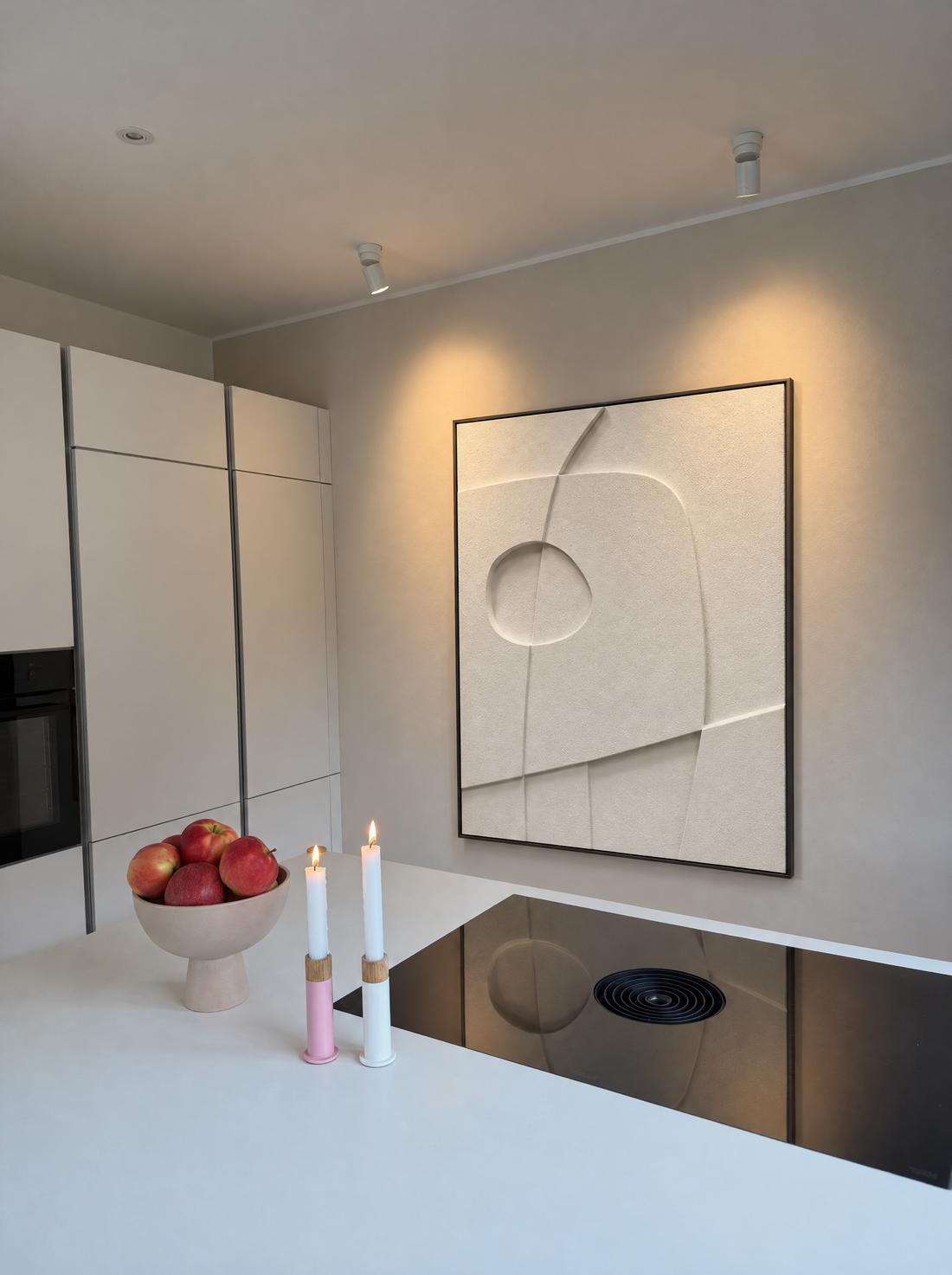
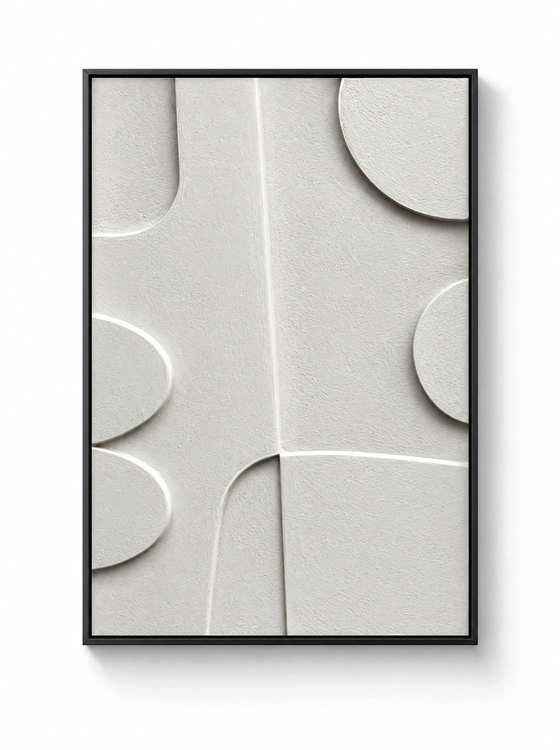
And when sunlight falls on Curva, our eyes feel wonderfully rested. The curves of a work of art like Curva can inspire the way we approach its own horizon. A piece with many rounded lines always draws the eye, and leaves our spirit softer and more relaxed. The works of The Soft Minimal always set off, without our noticing, a flow of energy that moves through us: while we look at one, our senses and our mind respond in a similar way. If a work of art is to give the body a frame it feels good in, the whole of it needs rhythm, from the way its forms are laid out to its surface. We did a lot of research to create a frame like that for the body, and Curva's layout, structure and surface have the rhythm to do it.

II. An Unseen Boundary
To design a work like Curva in keeping with The Soft Minimal's standard of putting people at the center, we have to take body image theory into account. It is our unconscious, always shifting sense of our own body in a space, and of a boundary we cannot see that lies just outside the soul. What a space or an object is like for us depends on how each of us senses our own body, a map we begin drawing very early in life.
This phenomenon cannot be measured, but it can be felt, and we can let it guide the delicate arrangement of forms. Arranging them is a balance of structure and material: how near or far each part sits, which way it faces, so that the psychological boundary around the body is respected. As the designers of these works, we need to listen to our own sense of the body, and to that of the person who will live with the work, so we can imagine comfortable proportions for a given room, or how a wall relief can give the soul the most support.
III. What Surrounds Us
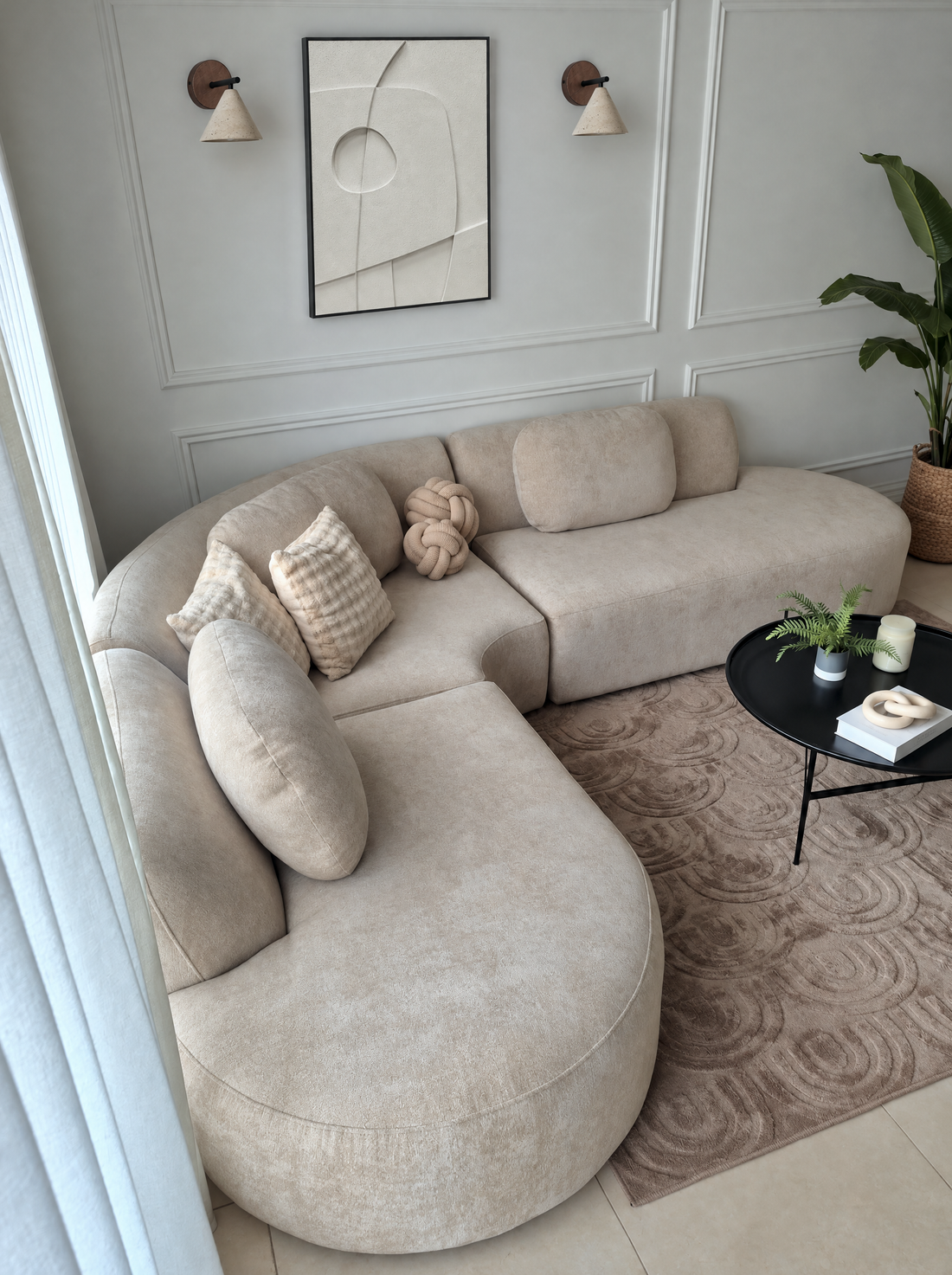
The core reason for making Curva is to keep our fragile bodies safe and to be a support for our busy minds. So the walls that hold Curva become a continuation of our body and mood. When we shut our eyes to sense it, it feels as if we had drawn the curtains to keep the world out and come back to ourselves. This is because the body, by nature, tenses its muscles when danger comes near, and we turn the lock on the door to shore up the barrier that protects us from the outside.
But we take fresh air in through the nose and down to the lungs, the way an open window brings a room to life. And when stress gets the better of us, we clear away some of the clutter around us to restore order. To change who we are, we change what is around us. With that understood, a Curva on the wall can help us in every part of life: works like it must be reliable and useful, and yet they must also understand how we feel. Walls should keep quiet, and lend Curva an ear. When we understand that a space shapes us just as we shape it, that is when we can create delicate works, ones that bring safety, moments alone and the closeness of being together.


IV. Into the Way We Think
Square & Curve, our new collection, is an invitation into the way we think, and we hope you find ideas worth bringing into your life, your home or your workplace. All the works gathered in this new collection are Manuela's projects, from her student days to today. Rather than sorting them by type, we chose to write from the ideas behind them and from the details of each work's design and materials, to give our design language a philosophical point of view.
The short essays in the chapters above set out the beliefs and aims behind The Soft Minimal, and we hope they stay useful long after you have read them. If you are especially curious, there is more to read: leave your email further down this page, and each new essay will reach you as it comes out.
Finally, our hope is that The Soft Minimal gives you works of art that offer moments of pleasure for the eye, the hand and the mind, moments you go back to as the years pass. What we share here comes with thanks to many minds and many highly skilled craftspeople, some celebrated, others overlooked, who have led the way for our work, and to everyone out there who shares the same aim. Much is still left to do before the places we build are felt again, and luckily, many others are at work on it too. We hope our work inspires you, and that you will trust us whenever you choose a piece, for many years to come.
Four names, one panel
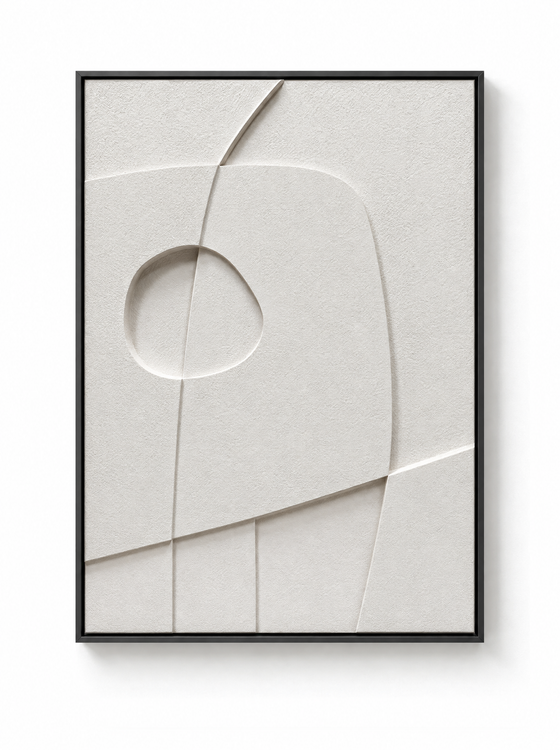
Curva, Orma, Arco, Sasso
The bend of a road or of a river: in Italian, each is a curva. The three forms carry Italian names too, taken from their shapes rather than their colors. Orma is a trace, the mark left where something has been. Arco is an arch. Sasso is a stone.
Raised and hollow
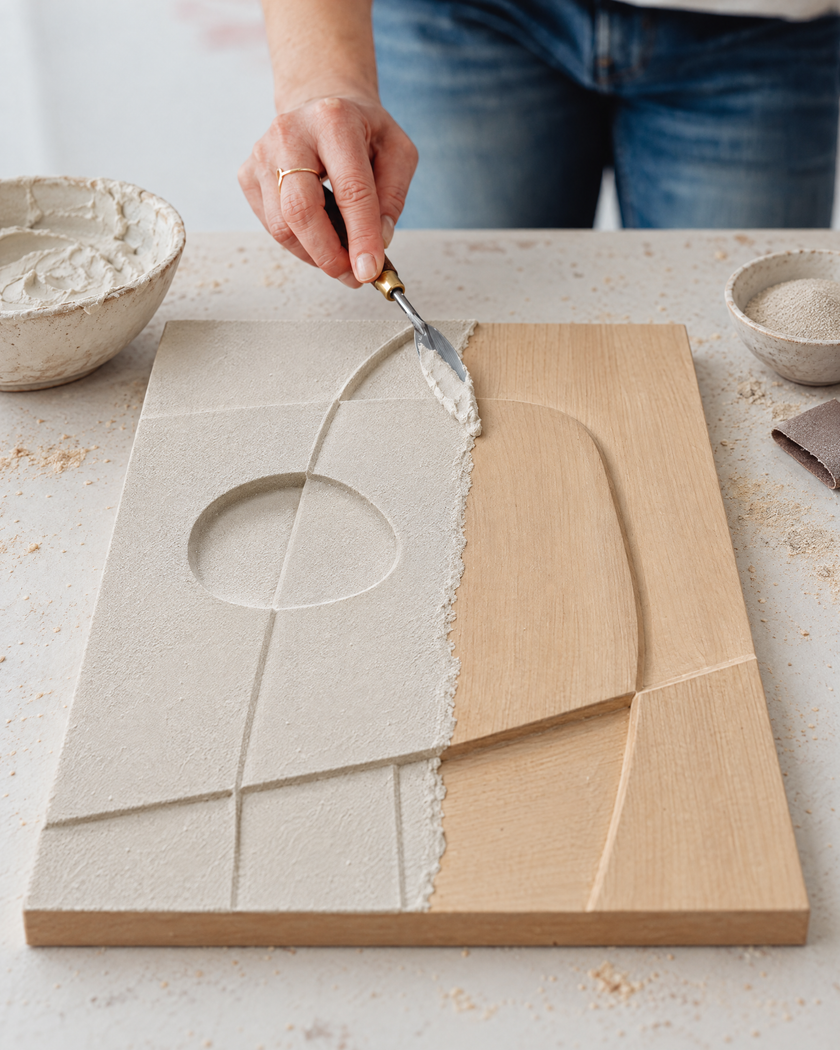
On the flat panel, some forms stand forward and others sink below the surface. A rounded slab comes toward the room; a hollow falls back from it. Both share the same matte color and the same fine sand.


THE ESSENCE OF
SOFT MINIMAL
Our philosophy is rooted in the belief that beauty must serve your well-being. Unlike rigid minimalism, our approach informed by Nordic discipline and Japanese tranquility seeks to amplify warmth and tranquility through restraint.
Every sculpture is crafted not just to look beautiful, but to feel right. We honor the tactile effect of natural materials and the artful balance of light and shadow, ensuring our pieces act as a meditative anchor in your space.


