The full story
Solid & Void
Every building is made of two things: the walls that are built, and the empty space they leave. Architects call them solid and void. We live in the rooms, not in the walls.
In our Journal essay Space and Form, the void was the open space between the things in a room. This collection looks for it inside one of those things. A vase is a few ceramic walls around a hollow, and the hollow is the useful part: it holds the water and the stems.
Manuela, architect and artist at The Soft Minimal, designed these twelve. Each carries the Italian name of a part of a building that makes a void or frames one, and each name points to something you can see on the vase.
Pozzo: The Well
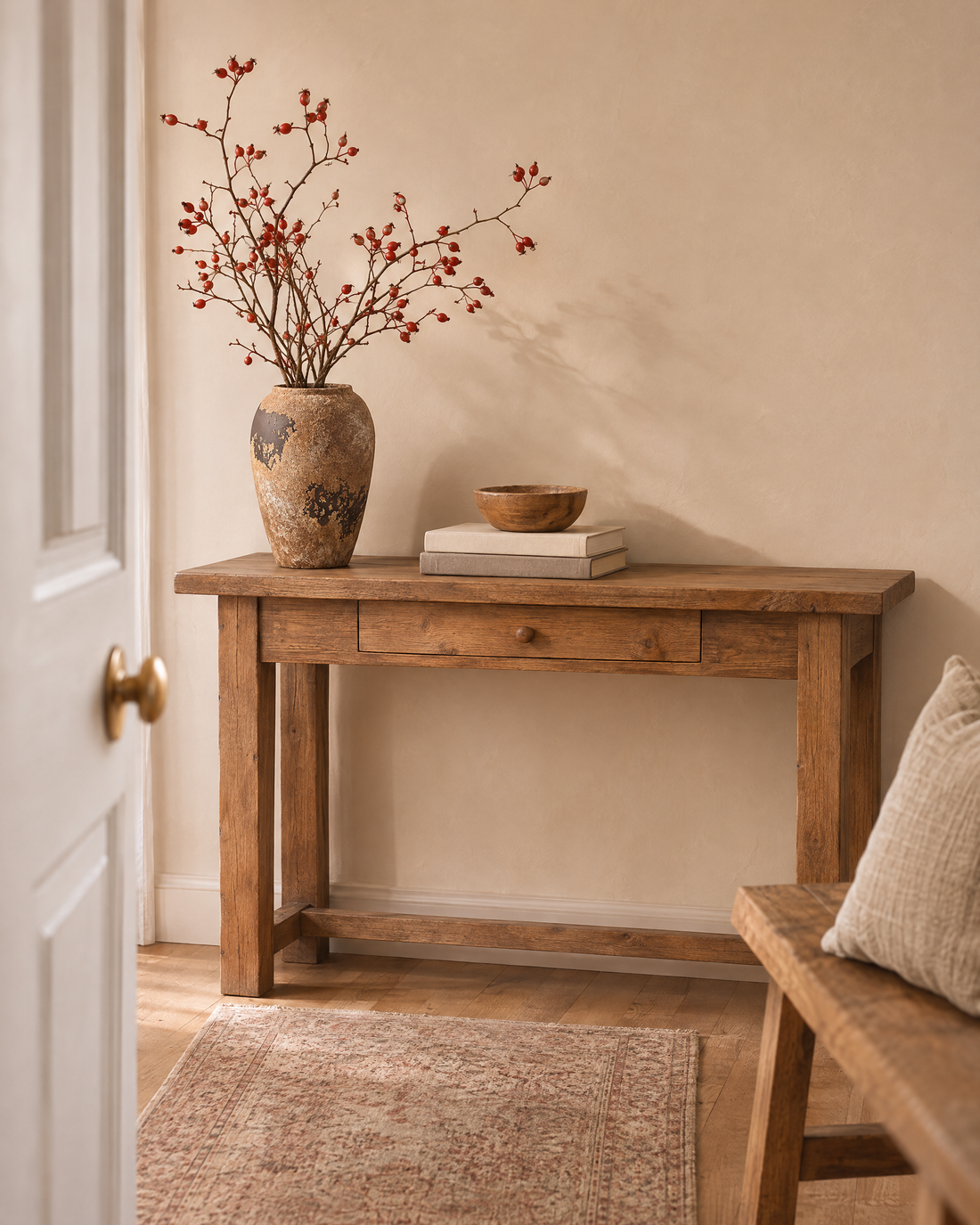
A well is a void dug on purpose: a round shaft cut down through the earth until it meets water. Pozzo is the Italian word for it. The vase is coated in a coarse, earth-brown layer, like soil just turned by a spade, that breaks open in places onto smooth dark brown. A rounded lip rings the mouth, and the inside is dark, the way a well looks from above.
Corte: The Courtyard
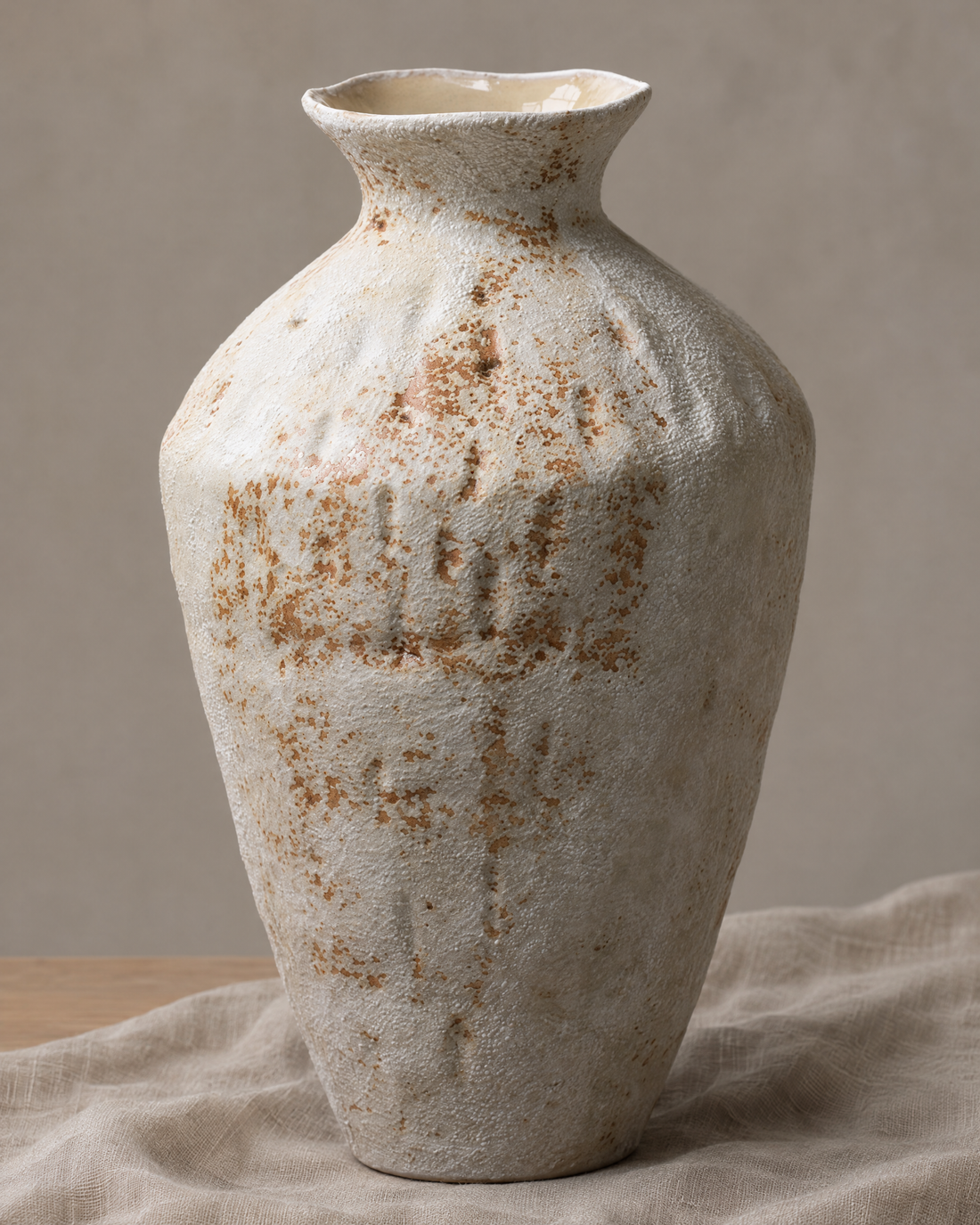
In an Italian house, the corte is the courtyard: open ground inside the walls, left without a roof so that the rooms around it get light and air. Corte, the vase, has the same open middle. Its walls bend in and out under the press of fingers, chalk white with rust showing through, and its mouth flares wide with an uneven rim, open at the top like the courtyard itself.
Spigolo: The Edge
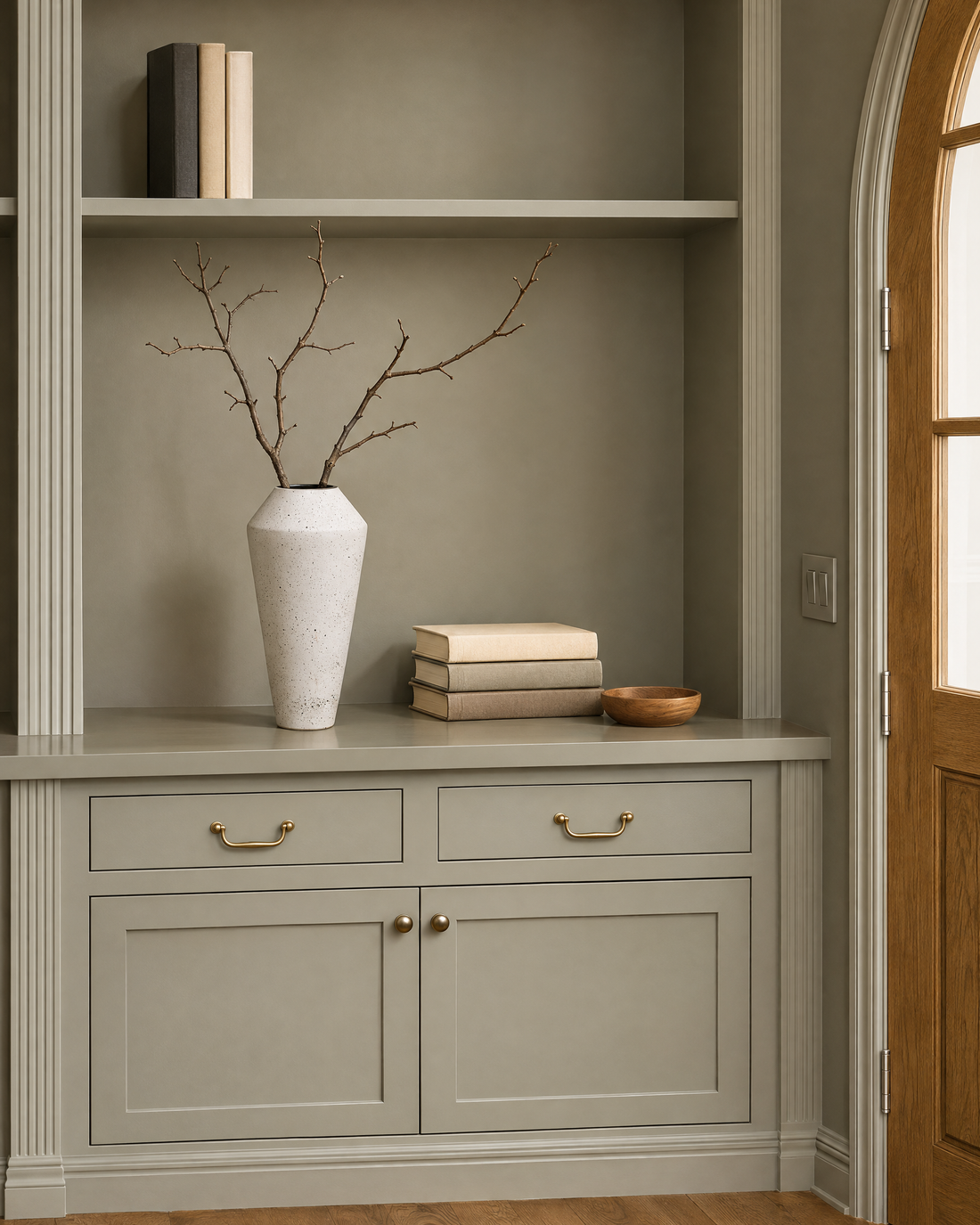
Spigolo is the edge where two faces of a wall meet, the corner a hand runs down when turning into a hallway. On this tall vase, matte white and flecked with black, a single sharp edge circles the shoulder, where the sloping top turns into the long body below. The hollow inside stays out of sight. The edge is how the eye knows its shape.
Oculo: The Round Opening
An oculo is a round opening cut into a wall or a roof, from the Latin word for eye. The best-known sit at the top of a dome, where daylight falls in through a circle of sky. All three forms of this vase carry the same flared rim, black and matte, around a round mouth, above a white body splashed with black. Seen from above, the black ring frames the dark inside.
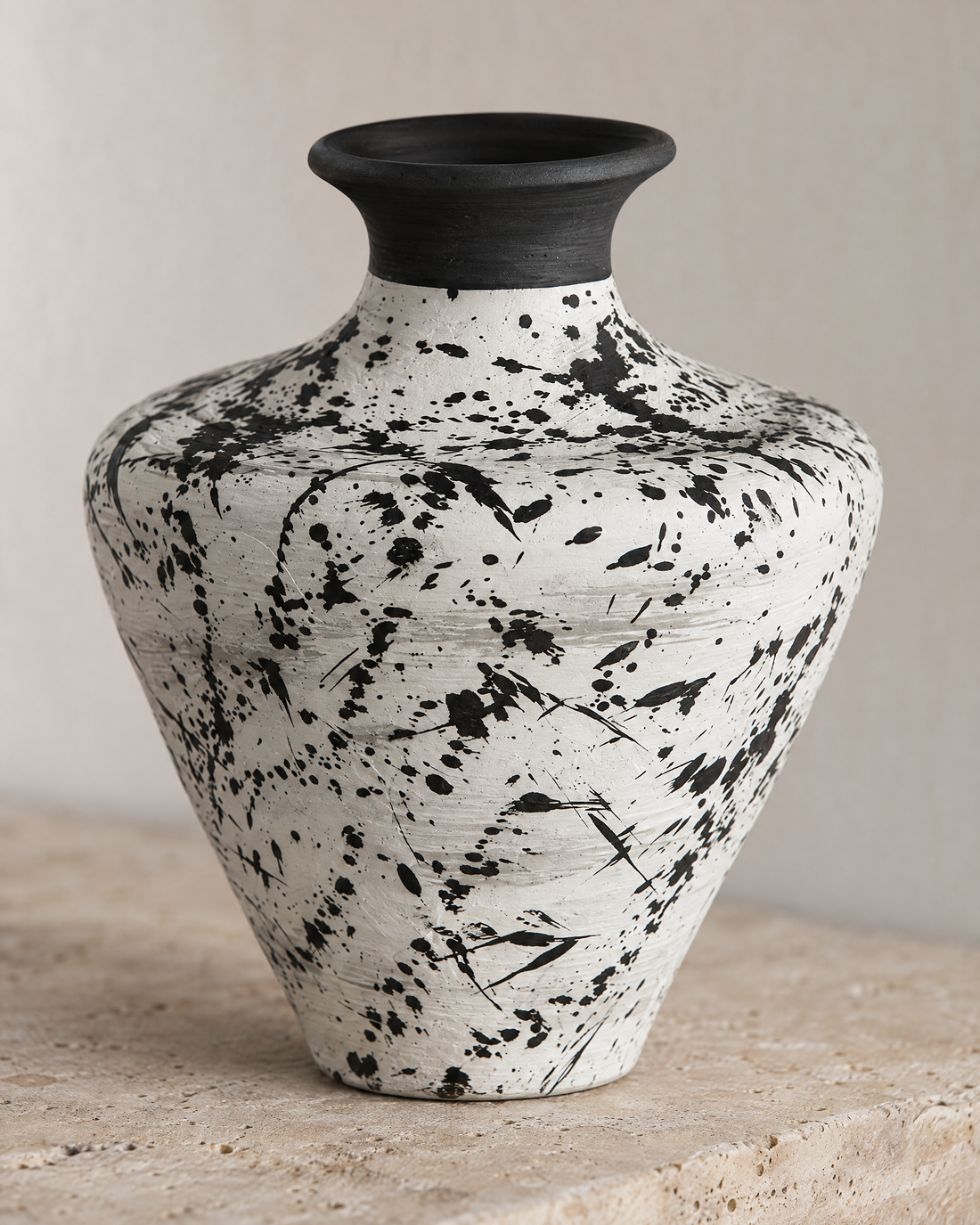
Nicchia: The Niche
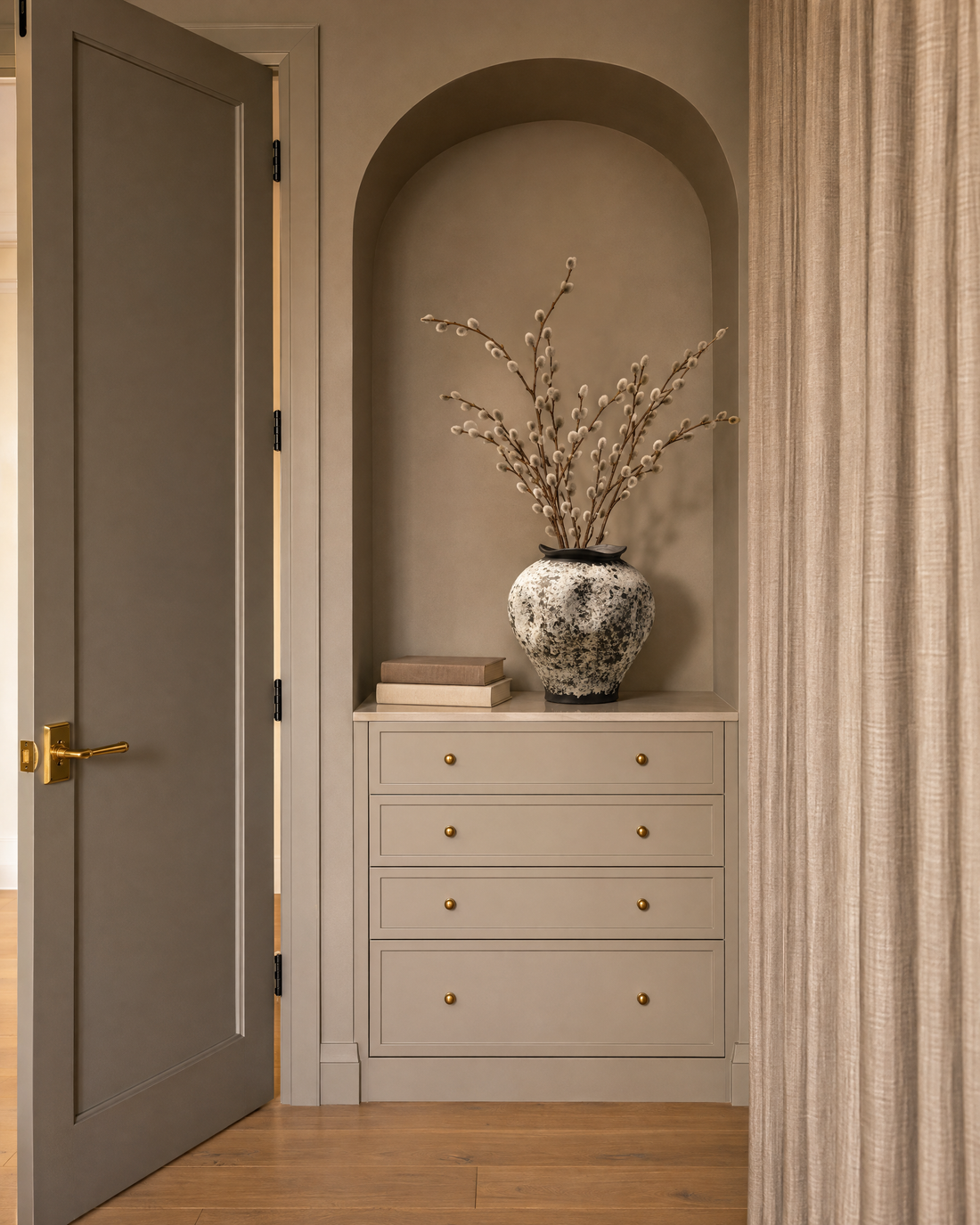
A nicchia is a niche: a hollow cut into the thickness of a wall, most often to hold a statue. It is a void made to keep something. This round-bellied vase has broad hollows of its own, pressed into its sides so that it leans a little out of round. Over the black, white lies in patches, like frost on dark stone, and the black rim is thick and wavy, like the edge of a leaf.
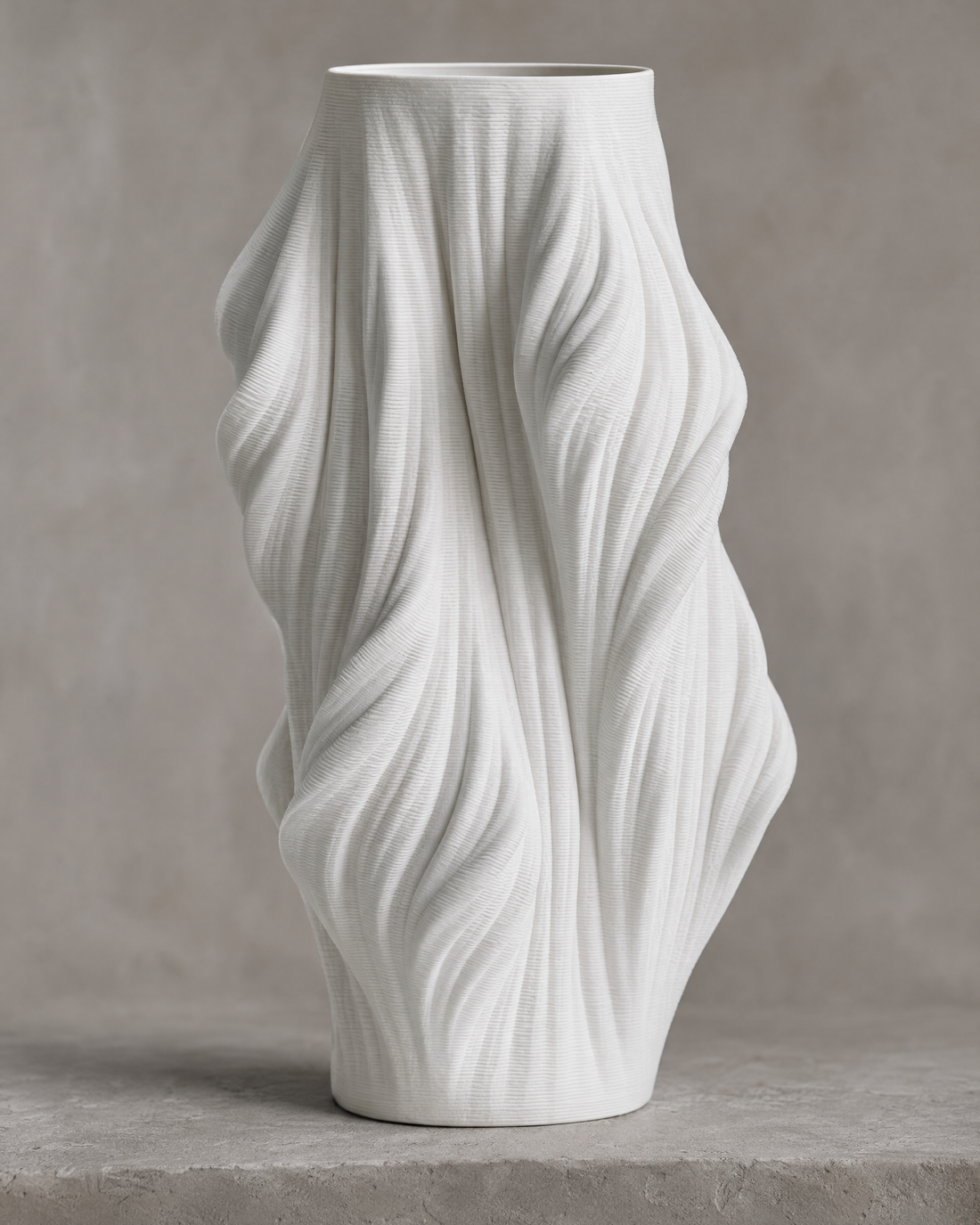
Cariatide: The Caryatid
A column carries a load as a person does, upright under the weight. The caryatid takes that idea all the way: a carved woman stands in place of the column and holds up the roof, so the porch beneath her stays open. Cariatide keeps only her robe. Its folds run from the round mouth down to the base, turning as they fall, like heavy cloth on a body in motion.
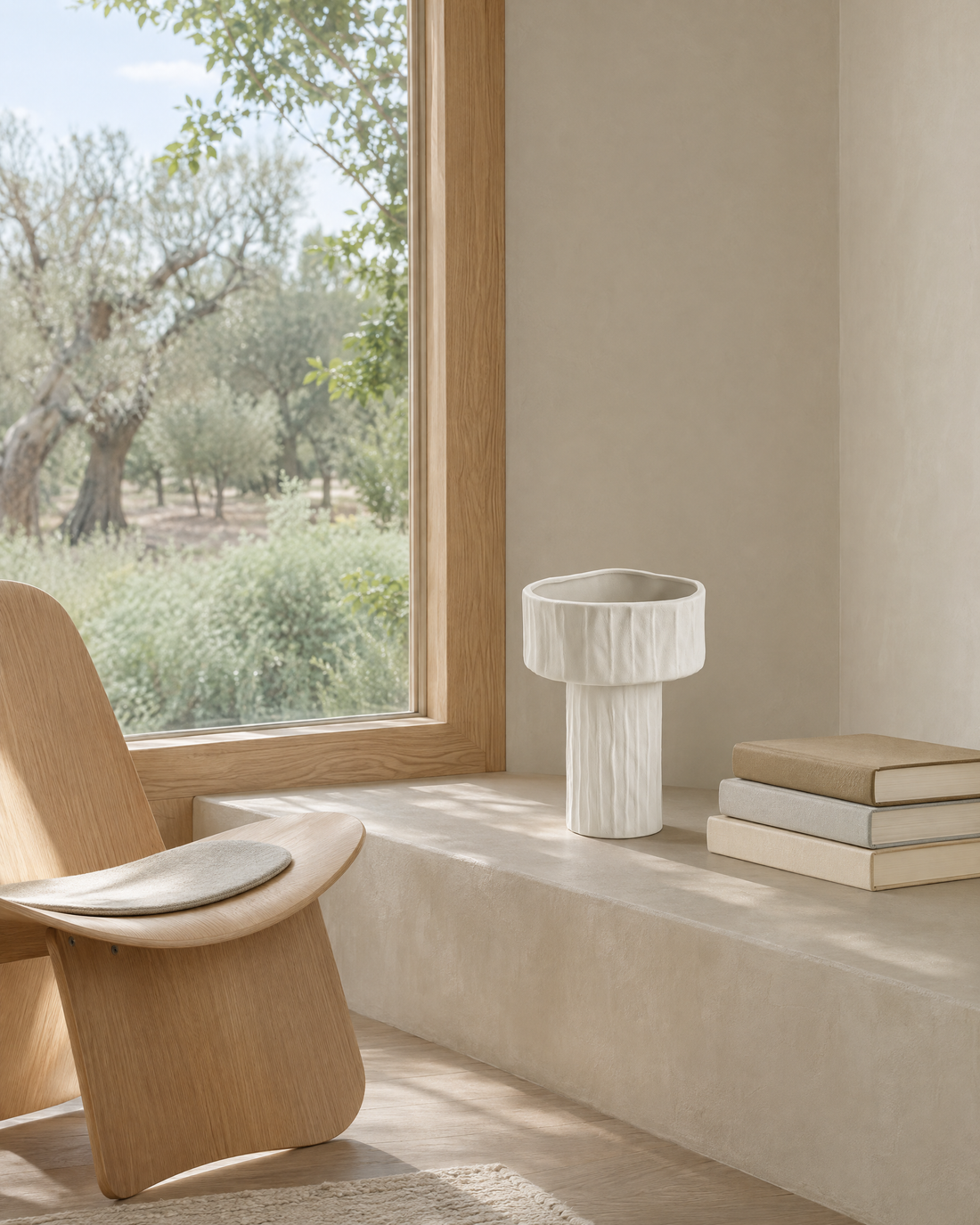
Rocchio: The Log and the Column
Cut a tree trunk into short rounds, and each one is a rocchio. Builders use the same word for the round stone blocks stacked one on another to make a column. Every form of this vase stands on such a round, white and ridged from top to bottom like bark: a tall single column, a wide shallow top raised on a shorter one, and a low footed bowl.
Vani: The Rooms
Vani are rooms, or openings: the empty spaces held between walls. Our Vani are six little vases, each easy to hold in one hand, in sand and in black, and no two alike in shape. Each has its own walls around its own hollow, and a single small opening on top, like a room with one door. Three have small steps notched down one edge, like a stair seen in profile.
Impluvio: The Rain Basin
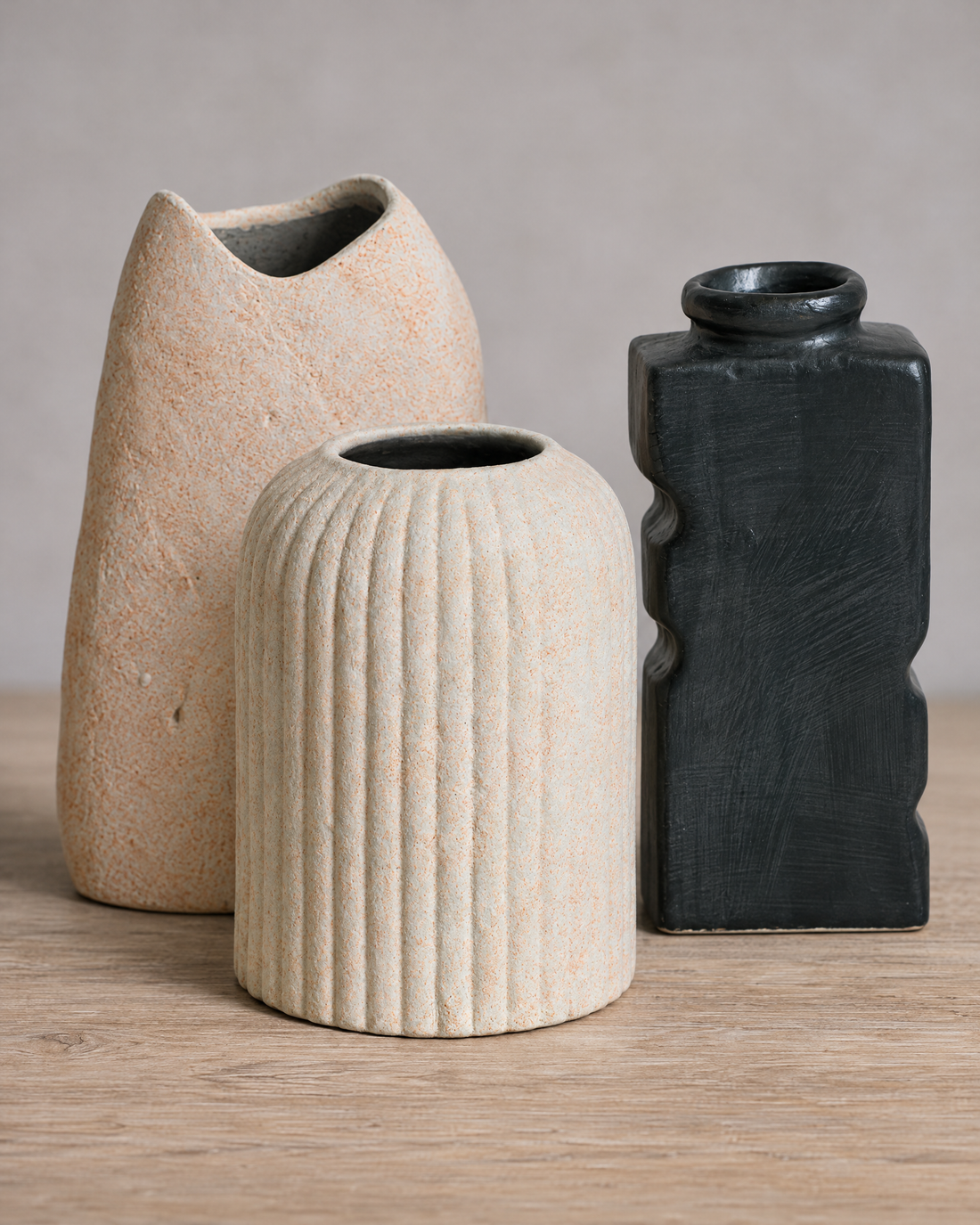
In the hall of a Roman house, the roof had an opening, and beneath it, set into the floor, a shallow basin caught the rain. That basin was the impluvium. Impluvio lifts its own basin on a thin, ribbed foot: a wide bowl, pale outside and black inside, with a rim that rises and falls. If Oculo is the opening in the roof, Impluvio is the basin under it.
Traforo: The Passage Through
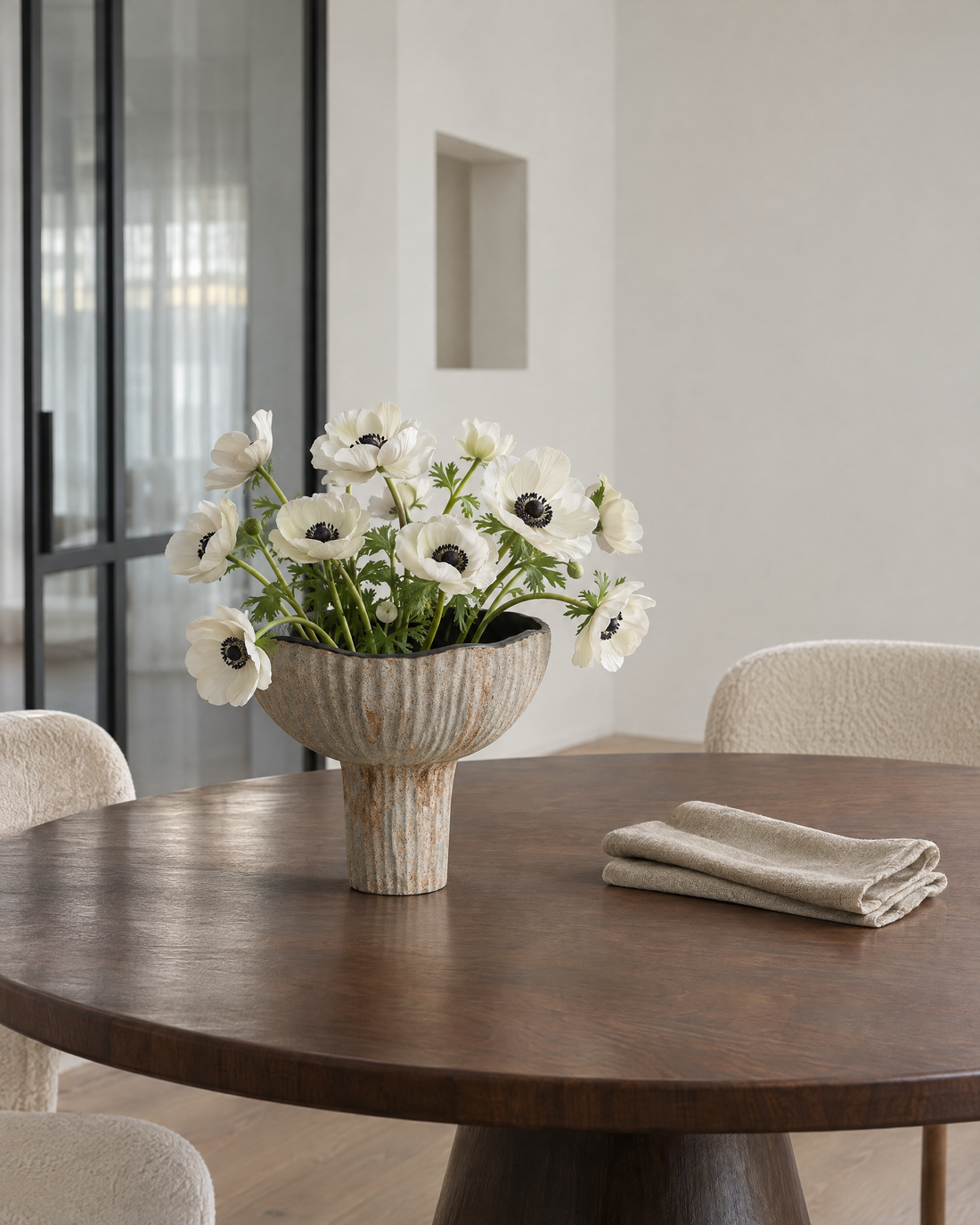
In Italian, traforo means boring through, and also what that leaves behind: a tunnel through a mountain, or a pattern pierced in a surface. In this vase, the void goes all the way through. A round hole crosses the flat body from front to back, raised circles spread out around it the way rings spread on a pond, and the room behind shows in the middle. Flowers go in at the top.
Sipario: The Curtain
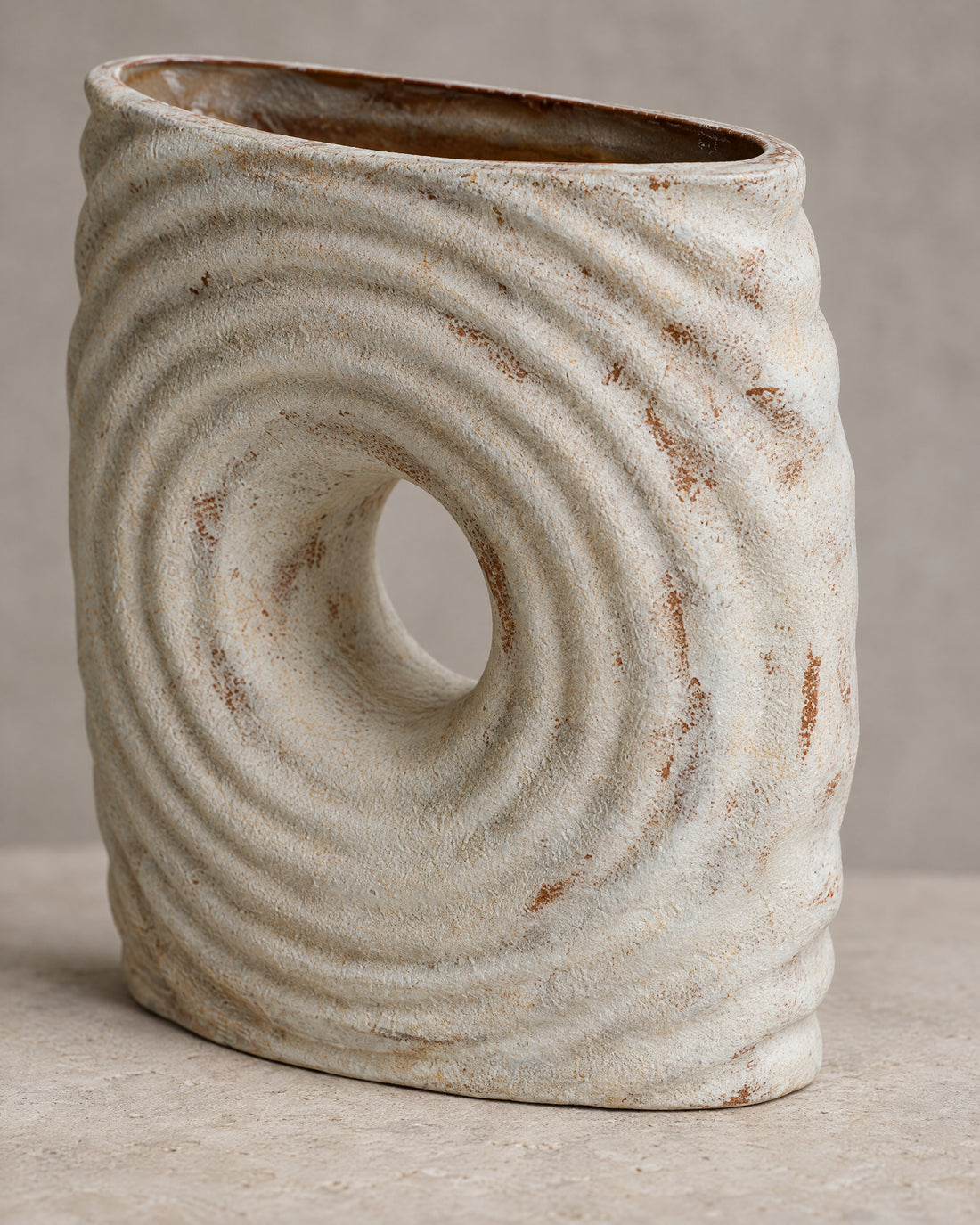
A sipario is the curtain at the front of a stage. It hangs between the audience and an empty stage, and when it opens, every eye goes to that space. Sipario is cream all over, made of soft, upright pleats that start at a narrow foot and fold in along the rim, the way fabric bunches where a curtain is drawn back.

Embrici: The Roof Tiles
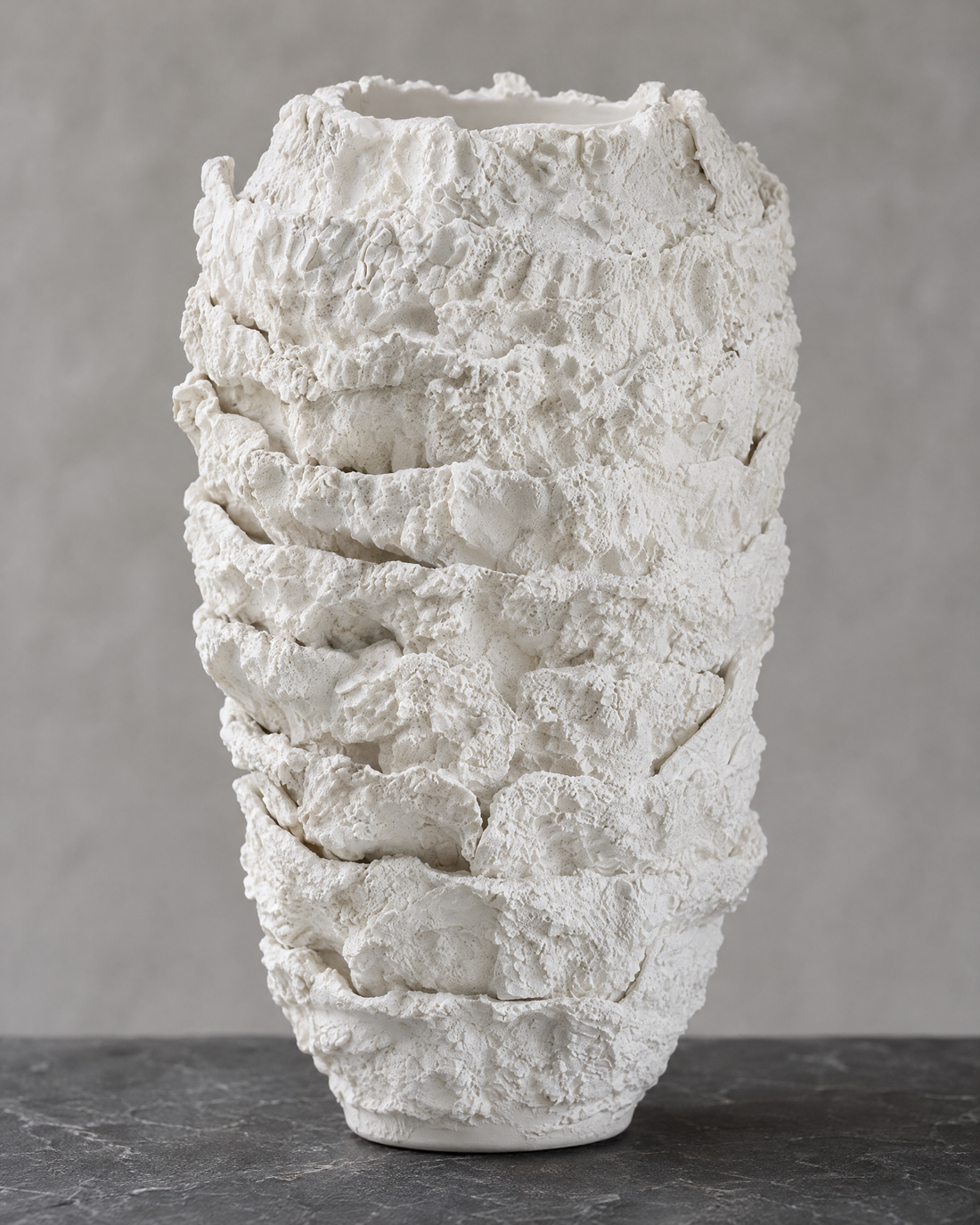
Embrici are flat roof tiles, the kind laid on old Roman-style roofs. The word comes from the Latin for rain, the very thing they keep off the room below. The vase is chalk white and covered in rough-edged layers, each one overlapping the next from the foot to the lip, so the surface steps out and back like a tiled roof seen up close.
A cut branch standing in a well, a handful of garden stems in a courtyard. The walls arrive finished. The empty space inside is for water and whatever you cut this morning.